I was quite surprised by the number of romantic vignettes in Dan Clowes' Ice Haven, though not surprised at how dysfunctional they all were. Just about every character is faced with some sort of relationship issue: Violet and Charles' parents divorce, Violet marries and subsequently loses Penrod, Charles harbors feelings for his step-sister, Carmichael has a crush on Paula, Mr. and Mrs. Ames are constantly on the outs, Vida and Kim Lee share a brief moment of celebratory lust, Julie "Patheticstein" is pregnant. There are no traditional romantic elements, and I would never categorize Ice Haven as a story about love, but it is definitely one of the more prevalent themes throughout the book.
I found Violet's romantic relationships to be the most interesting in the book. She is a young girl who is clearly very confused about the concept of love (her mother does not seem to be a very good role-model), yet desperately wants Penrod to love her and is willing to do anything to make it happen. However, the only person who cares about her the way she wants is her step-brother, Charles. She cares about him in a different way, and it is perhaps one of the most hearbreaking lines in the book: "I hope someday I grow up and marry a guy just like you" (81.5). Nevertheless, Violet does undergo a major transformation due to her failed marriage to Penrod and, by the end of the book, there is a glimmer of hope that things will be better for her in Hawaii.
Thursday, December 6, 2007

Wednesday, December 5, 2007
A few questions about Ice Haven
Clowes' artwork throughout the book seemed so familiar in some instances that I wondered if some of it wasn't imitation or homage, but I'm not well versed enough in my classic artists that I can pinpoint whom he's aping.
The Charles sections with its focus on a small child's deeply philosophical thoughts reminded me of "Peanuts;" but the artwork not so much so . . . though the images of children singing was evocative of Schultz's singing kiddies for me.
Some of the Mr. and Mrs. Ames sections reminded me of "Spiderman" but maybe that's just because Mr. Ame's hair is so reminiscent of J. Jonah Jameson's
Other than that I can say images felt really familiar but can't put my finger on the possible inspirations. Any help here?
The plot itself in which the residents of a small seemingly isolated town goes about it's trivial business against the backdrop of a major crime, reminded me quite a bit if Gilbert Hernandez's Human Diastrophism in which the residents of Palomar attend to their daily dramas while a serial killer is on the loose in town. Not to mention that strange monolith referred to as "our friend" (8.2) in Ice Haven is an echo of those strange idols that appear throughout the Palomar stories. Not so sure if this is so intentional as the earlier referenced artistic homages.
The Charles sections with its focus on a small child's deeply philosophical thoughts reminded me of "Peanuts;" but the artwork not so much so . . . though the images of children singing was evocative of Schultz's singing kiddies for me.
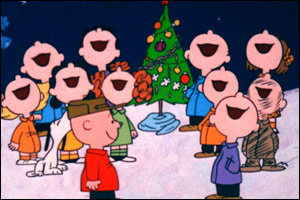
Some of the Mr. and Mrs. Ames sections reminded me of "Spiderman" but maybe that's just because Mr. Ame's hair is so reminiscent of J. Jonah Jameson's
Other than that I can say images felt really familiar but can't put my finger on the possible inspirations. Any help here?
The plot itself in which the residents of a small seemingly isolated town goes about it's trivial business against the backdrop of a major crime, reminded me quite a bit if Gilbert Hernandez's Human Diastrophism in which the residents of Palomar attend to their daily dramas while a serial killer is on the loose in town. Not to mention that strange monolith referred to as "our friend" (8.2) in Ice Haven is an echo of those strange idols that appear throughout the Palomar stories. Not so sure if this is so intentional as the earlier referenced artistic homages.
Ice Haven: Artistry/Vulgarity
From the panels on page 4, in which comic book critic, Harry neighbors, eloquently addresses the age old of question of what comics are (all the while, urinating, scratching his ass, and eating cereal in his underwear*), I knew Clowes was going to be pulling a few tricks out of his bag for Ice Haven. If there is a mystery at its core, it's not so much "What happened to Danny Goldberg" as it is "what happened to art?" That is to say if it's at all possible to get a handle on what art is. Or to put it in the words of Random Wilder, Ice Haven's self proclaimed future poet laureate "Is there anyone left with the acuity to recognize a genuine artistic sensibility" (9.1) That the reader is not likely to recognize such sensibility in the bombastic Wilder, complicates a reading of his narration as an organizing voice in the larger story of Ice Haven.
Wilder's young neighbor, Vida, is perhaps the only other character in Ice Haven with artistic pretensions and her work finally pushes Wilder to the realization that he is a hack (71-72). In this section of Wilder's story the colors and line have been simplified, reducing Wilder to a more iconic form, a process that appears to have been in motion throughout the book (look at Wilder's legs in "motion" in each of his sections to get the best sense of this). The last section of the book (before Naybor's comes onpage to "explain" everything), is given over to Vida's narration (whereas the first [main] section of the book introduced Wilder as the narrator). Here Vida reveals that she has finally been discovered and is headed to Hollywood to become the "biggest whore ever" (83.4).
Maybe we were better off with Wilder (who in a sense does get the final word as Danny Goldberg recites one of his poems in the book's final frame).
Or maybe the sections of the book that resonate most, don't have anything to do with meta-masturbation. Maybe the heart of the story rests with the human dramas that Wilder would credit to "a public imagination awash in vulgarity" (19.7).
*This sequence is reminiscent of another Clowes' strip depicting an actor playing the author going about his banal morning routines)
Wilder's young neighbor, Vida, is perhaps the only other character in Ice Haven with artistic pretensions and her work finally pushes Wilder to the realization that he is a hack (71-72). In this section of Wilder's story the colors and line have been simplified, reducing Wilder to a more iconic form, a process that appears to have been in motion throughout the book (look at Wilder's legs in "motion" in each of his sections to get the best sense of this). The last section of the book (before Naybor's comes onpage to "explain" everything), is given over to Vida's narration (whereas the first [main] section of the book introduced Wilder as the narrator). Here Vida reveals that she has finally been discovered and is headed to Hollywood to become the "biggest whore ever" (83.4).
Maybe we were better off with Wilder (who in a sense does get the final word as Danny Goldberg recites one of his poems in the book's final frame).
Or maybe the sections of the book that resonate most, don't have anything to do with meta-masturbation. Maybe the heart of the story rests with the human dramas that Wilder would credit to "a public imagination awash in vulgarity" (19.7).
*This sequence is reminiscent of another Clowes' strip depicting an actor playing the author going about his banal morning routines)
Sunday, December 2, 2007
France v. England: Simmonds' culture wars...
The tale of Gemma Bovery's tragic demise was a great story in and of itself, but I was particularly interested by the undercurrent of culture clash between the British and French sensibilities of our dear characters. Simmonds seems to have fun playing with stereotypes, especially in the "graphic" side of the novel. Joubert, for example, is a classic round-nosed old Frenchman, surrounded by his baguettes the first time we see him (2) and several times after throughout the book. Simmonds continues with the awkwardly rumpled (and charmingly British) Charles, and the cool eyes and aristocratic nose of Herve's wealthy French mother (77).
I found the culture clash most interesting as it manifested in the transformation in Gemma. She begins as a slightly plump British woman, clothed in floor-length skirts and oversized t-shirts (23). Her idea of France is romantic at first, a way to escape Charlie's ex-wife. "She begins to dream of a place unclogged by traffic, a landscape of tranquil communities"--in contrast to London, which she now perceives as full of "'nauseating middle-class ghettos full of dimmer switches, panic buttons and kids behind burglar bars.' As for the English countryside, 'nothing left of it, just one big suburbia overrun with cars and garden centres'" (28).
However, the mysticism dissipates soon after she arrives and realizes that France is just as "real" a place as the one she left behind. "I did not come to Normandy to think of bum creams," she complains (39). Failed by the French countryside, she finds her romantic countryside in the arms of Herve, under the failing roof of his aging chateau. This is when she begins to come around, to abandon her British sensibilities--her British husband, the unabashedly in-your-face middle-class Wizzy Rankins (see page 43!), and especially her looks. She gets slimmer and slimmer, gets a more stylish haircut, and streamlines her wardrobe, at the same time daydreaming about becoming "like an 18th-century mistress" (70).
So if Simmonds is showing the process of a character abandoning their culture in pursuit of another, is there a moral? What does Gemma's death mean? And what does it have to do with the role of "Madame Bovery" in the text, especially as it plays out as a symbol of "Frenchness" that Gemma isn't--and is unwilling to become--aware of?
I found the culture clash most interesting as it manifested in the transformation in Gemma. She begins as a slightly plump British woman, clothed in floor-length skirts and oversized t-shirts (23). Her idea of France is romantic at first, a way to escape Charlie's ex-wife. "She begins to dream of a place unclogged by traffic, a landscape of tranquil communities"--in contrast to London, which she now perceives as full of "'nauseating middle-class ghettos full of dimmer switches, panic buttons and kids behind burglar bars.' As for the English countryside, 'nothing left of it, just one big suburbia overrun with cars and garden centres'" (28).
However, the mysticism dissipates soon after she arrives and realizes that France is just as "real" a place as the one she left behind. "I did not come to Normandy to think of bum creams," she complains (39). Failed by the French countryside, she finds her romantic countryside in the arms of Herve, under the failing roof of his aging chateau. This is when she begins to come around, to abandon her British sensibilities--her British husband, the unabashedly in-your-face middle-class Wizzy Rankins (see page 43!), and especially her looks. She gets slimmer and slimmer, gets a more stylish haircut, and streamlines her wardrobe, at the same time daydreaming about becoming "like an 18th-century mistress" (70).
So if Simmonds is showing the process of a character abandoning their culture in pursuit of another, is there a moral? What does Gemma's death mean? And what does it have to do with the role of "Madame Bovery" in the text, especially as it plays out as a symbol of "Frenchness" that Gemma isn't--and is unwilling to become--aware of?
The Jealous Lover
In the last section of the graphic novel, I couldn't help but notice how similar Joubert and Charlie are. On page 102, the last image of the page has the two revisiting the day Gemma died. Separated by a wine bottle, the two men look strikingly alike. Both have a similar shaped nose, glasses, and a look that we've seen on both men's faces numerous times. This image appears three more times on the opposite page (103). It is interesting that we surprisingly learn that Charlie is just as jealous as Joubert. He suspects the worst from Gemma. When he comes back to Normandy and hears a man panting he automatically assumes sex. Unfortunately, Gemma is choking and Charlie's rash actions ultimately cause her death. Joubert acts in a similar, yet not so violent way. His brash actions include the mailing of the pages to Gemma to stop the affair with Herve and then the mailing of the pages to her acquaintances. Both men fit into the jealous lover category, acting out in a ridiculous way. Moreover, Gemma is an unattainable woman for both men. Joubert in obvious ways. He looks at her as a character in a novel that comes to life. To Charlie, she's the distant wife he can no longer connect with. Charlie is the opposite of Herve. Finally, she causes the demise of both men. She leaves Charlie in emotional despair and financial debt. She leaves Joubert with uneasiness and in many ways an unfinished story.
While Charlie explains to Joubert what really happened, Joubert is still stuck in a world of fantasy, or fiction. In this way, the image also works to show how the characters are opposites of each other. Charlie understands the reality of the situation. His wife cheated on him, died, and left him with nothing. Joubert holds on to the fiction, insisting that the Flaubert novel is the story of Gemma's life. The ending of the novel is a confirmation of this when we learn that Jane Eyre has moved in next door. The story continues for Joubert.
While Charlie explains to Joubert what really happened, Joubert is still stuck in a world of fantasy, or fiction. In this way, the image also works to show how the characters are opposites of each other. Charlie understands the reality of the situation. His wife cheated on him, died, and left him with nothing. Joubert holds on to the fiction, insisting that the Flaubert novel is the story of Gemma's life. The ending of the novel is a confirmation of this when we learn that Jane Eyre has moved in next door. The story continues for Joubert.
Reading Gemma Bovery
I was initially a little overwhelmed by the amount of material on any single page in Gemma Bovery, unsure whether to focus on the text, the diary entry, the comics, the letters, etc., and even more unsure of how all of these elements worked together to form a cohesive story. Though the book is told from Joubert's point of view, the other visual elements provide the reader with a different perspective on the events he is describing. For instance, Gemma's diary entries are initially quite vague and only hint at what is going on in her life, though they do contain the occasional outburst about Judi or Charlie's children. Joubert even comments about how surprised he is that she does not go on at great length about her affair, much to his disappointment. However, after Herve ends things and she is in emotional distress her entries get more personal and reflexive, similar to the way they were after her affair with Patrick ended. Gemma's handwritten entries are a nice break from the excessive amount of text that Simmonds provides us.
Like the diary entries, the comics in Gemma Bovery also evolve throughout the course of the book. At the beginning they are merely drawings to accompany Joubert's narrative, with the occasional daydream or glimpse into Gemma's imagination. They are not especially comic in form, but more like sketches or illustrations. The majority of what would technically be classified as comics sequences typically involve Judi and tend to be the more humorous parts of the book. The pictures that accompany Gemma's affair with Herve could hardly be considered comics, for they are drawn in such a dreamy and romantic fashion (see pages 53 and 67 in particular). This lack of consistency made it difficult to know how to interpret the pictures, whether we should take them seriously or view them as comical interpretations that accompany the text.
Similar to Eddie Campbell, Posy Simmonds is extremely ambitious in her experimentations with the comics form. However, I would argue that she is not as successful as Campbell was. Though her story is much easier to follow, I often found that her lack of consistency in narrative voice and form came across as sloppy. I am unsure of what exactly she was trying to accomplish in terms of form, and wish she had chosen a better way to tell such an interesting story.
Like the diary entries, the comics in Gemma Bovery also evolve throughout the course of the book. At the beginning they are merely drawings to accompany Joubert's narrative, with the occasional daydream or glimpse into Gemma's imagination. They are not especially comic in form, but more like sketches or illustrations. The majority of what would technically be classified as comics sequences typically involve Judi and tend to be the more humorous parts of the book. The pictures that accompany Gemma's affair with Herve could hardly be considered comics, for they are drawn in such a dreamy and romantic fashion (see pages 53 and 67 in particular). This lack of consistency made it difficult to know how to interpret the pictures, whether we should take them seriously or view them as comical interpretations that accompany the text.
Similar to Eddie Campbell, Posy Simmonds is extremely ambitious in her experimentations with the comics form. However, I would argue that she is not as successful as Campbell was. Though her story is much easier to follow, I often found that her lack of consistency in narrative voice and form came across as sloppy. I am unsure of what exactly she was trying to accomplish in terms of form, and wish she had chosen a better way to tell such an interesting story.
Gemma Bovery: Oversexed or Balanced?
After finishing Gemma Bovery, it’s interesting to flip back through the novel and glance over the pages. There are many things of note, such as the inconsistent layout, fonts and depictions of characters, but what catches my eye the most are things that seem mostly consistent – specifically the way couples appear in bed and the amount of time characters spend imagining, recreating or engaging in sexual encounters. In this manner, Gemma Bovery thrives on the disconnect or connect of lovers, and I can’t help but question if this constant attention to sex (or the lack thereof) is balanced in the text or overstated.
For example, whenever Charles and Gemma are depicted in bed, both parties are shown in different states of mind (5.5, 6.1, 7.7, 19.3, 44.3-4, 68.3, 79.1). There never seems to be a moment where we see a sexual connection between them in their own bed. Eventually this disconnect is shown between Joubert and his wife as well (68.4, 90.1-4) to suggest the parallel of Madame Joubert’s and Charles’ affair that Simmonds points out in the interview with Paul Gravett. Simmonds intended (and succeeded) to depict other characters besides Gemma as unfaithful, lustful and out of line. Joubert goes so far as to imagine himself and Gemma in bed together (84.4), yet sexual desires are implied even farther than this. When Patrick takes Gemma out to dinner after they reacquaint, the eyes of every man in the restaurant, many of whom are with other women, are fixated on Gemma (87.1). A few pages later, Mark Rankin visits Gemma to check on her stability, and ends up caressing her shoulder (91.15) and suggesting that she might “let” him have sex with her as a means to pay off her debts (91.16). In showing us a consistent line of unfaithful men (or men who at least acknowledge their attraction to a beautiful and alluring woman), Simmonds creates an interesting balance of sexual desire in the text – a balance that detracts from or, in many ways, lessens the impact of Gemma’s adultery.
Yet as Simmonds seemingly places everyone in the community in which Gemma lives on the same plane of sexual desire to help justify Gemma’s actions, the text then becomes something of an oversexed depiction of life and an example of how marriage lacks this sexual desire. Perhaps Simmonds doesn’t want to depict Gemma as any more wrong than anyone else, something that Flaubert’s Madame Bovary may or may not do as well (I’d be interested to know if anyone’s read Flaubert’s work and knows whether or not Emma Bovary is singled out as the adulterer). And does Simmonds showing of numerous characters’ sexual desire in Gemma Bovery help to balance or weigh Gemma's actions, or simply fill the world with sex to “sell” this story in our present day culture that is consciously sexually-driven?
For example, whenever Charles and Gemma are depicted in bed, both parties are shown in different states of mind (5.5, 6.1, 7.7, 19.3, 44.3-4, 68.3, 79.1). There never seems to be a moment where we see a sexual connection between them in their own bed. Eventually this disconnect is shown between Joubert and his wife as well (68.4, 90.1-4) to suggest the parallel of Madame Joubert’s and Charles’ affair that Simmonds points out in the interview with Paul Gravett. Simmonds intended (and succeeded) to depict other characters besides Gemma as unfaithful, lustful and out of line. Joubert goes so far as to imagine himself and Gemma in bed together (84.4), yet sexual desires are implied even farther than this. When Patrick takes Gemma out to dinner after they reacquaint, the eyes of every man in the restaurant, many of whom are with other women, are fixated on Gemma (87.1). A few pages later, Mark Rankin visits Gemma to check on her stability, and ends up caressing her shoulder (91.15) and suggesting that she might “let” him have sex with her as a means to pay off her debts (91.16). In showing us a consistent line of unfaithful men (or men who at least acknowledge their attraction to a beautiful and alluring woman), Simmonds creates an interesting balance of sexual desire in the text – a balance that detracts from or, in many ways, lessens the impact of Gemma’s adultery.
Yet as Simmonds seemingly places everyone in the community in which Gemma lives on the same plane of sexual desire to help justify Gemma’s actions, the text then becomes something of an oversexed depiction of life and an example of how marriage lacks this sexual desire. Perhaps Simmonds doesn’t want to depict Gemma as any more wrong than anyone else, something that Flaubert’s Madame Bovary may or may not do as well (I’d be interested to know if anyone’s read Flaubert’s work and knows whether or not Emma Bovary is singled out as the adulterer). And does Simmonds showing of numerous characters’ sexual desire in Gemma Bovery help to balance or weigh Gemma's actions, or simply fill the world with sex to “sell” this story in our present day culture that is consciously sexually-driven?
Thursday, November 29, 2007
Gemma Bovery's Verticality

I really enjoyed Gemma Bovery (it seemed oddly invigorating after Jimmy Corrigan), and while I was caught up in the overall story (so much so that I’ve already finished), I did try to notice along the way how Posy Simmonds would strive for the little peaks at the end of each page (something that obviously was dictated by the original newspaper limits).
I think artistically Simmonds was forced to go “vertical” and in the end adapted quite well. While many of our readings this term have concentrated on how our eyes moved from left to right on a mainly square page, Gemma Bovery was the first to force our eyes up and down over a much longer vertical surface.
I’ll take one aspect of this which I found particularly captivating – the “stacked” level of artwork that would appear during the course of the novel, as can be seen in pages 6, 17, 28, 49, and 70, among others. We talked a bit in class about how it was often difficult to tell whether to read, then look at the artwork, or vice versa, or a bit of both, and in the end, I chose to do the last, reading a paragraph at a time before looking for the appropriate picture. It may violate our sense of how comics work (paging Scott McCloud), but I think in the end, Simmonds really manages to establish her own interesting stake in the larger graphic novel world.
And the vertical artwork seems to get stronger as we go on. Page 6 is really the simplest (just a series of panels illustrating each detail of the left-hand text), but in page 10, we’re already seeing some playfulness, as the photos appear to tumble out of Joubert’s hand. In 17, objects are beginning to overlap, and on page 28, there’s a subtle change to the artwork, as gray wash gives way to the black ink of the bottom right corner.
Page 70 is the best of these, in my opinion. Here Simmonds manages to convey a “crown” of sorts above the main character (no gray wash here either), a black-inked Francophile daydream sprouting upward as a tree. Everything works here, and by placing this in the upper left, Simmonds has really highlighted this montage. Our eyes fall upon it as we first turn to the page, and as we read through the text, we are drawn back piece by piece to the artwork, our eyes moving from the main character to the second level, and lastly to the nest and baby at the top. We return to the bottom, and see Herve's reaction to all this - his "deer caught in the headlights" look of shock. This is one of my favorite pieces of art from the book and not coincidentally, it signals the beginning of the end of Gemma’s fortunes.
Voyez-vous lundi!
I think artistically Simmonds was forced to go “vertical” and in the end adapted quite well. While many of our readings this term have concentrated on how our eyes moved from left to right on a mainly square page, Gemma Bovery was the first to force our eyes up and down over a much longer vertical surface.
I’ll take one aspect of this which I found particularly captivating – the “stacked” level of artwork that would appear during the course of the novel, as can be seen in pages 6, 17, 28, 49, and 70, among others. We talked a bit in class about how it was often difficult to tell whether to read, then look at the artwork, or vice versa, or a bit of both, and in the end, I chose to do the last, reading a paragraph at a time before looking for the appropriate picture. It may violate our sense of how comics work (paging Scott McCloud), but I think in the end, Simmonds really manages to establish her own interesting stake in the larger graphic novel world.
And the vertical artwork seems to get stronger as we go on. Page 6 is really the simplest (just a series of panels illustrating each detail of the left-hand text), but in page 10, we’re already seeing some playfulness, as the photos appear to tumble out of Joubert’s hand. In 17, objects are beginning to overlap, and on page 28, there’s a subtle change to the artwork, as gray wash gives way to the black ink of the bottom right corner.
Page 70 is the best of these, in my opinion. Here Simmonds manages to convey a “crown” of sorts above the main character (no gray wash here either), a black-inked Francophile daydream sprouting upward as a tree. Everything works here, and by placing this in the upper left, Simmonds has really highlighted this montage. Our eyes fall upon it as we first turn to the page, and as we read through the text, we are drawn back piece by piece to the artwork, our eyes moving from the main character to the second level, and lastly to the nest and baby at the top. We return to the bottom, and see Herve's reaction to all this - his "deer caught in the headlights" look of shock. This is one of my favorite pieces of art from the book and not coincidentally, it signals the beginning of the end of Gemma’s fortunes.
Voyez-vous lundi!
Wednesday, November 28, 2007
POV in Gemma Bovery
Granted, I'm only half way through Gemma Bovery, but I just wanted to throw out a question regarding Simmonds' unconventional use of point of view in telling the story. For a graphic novel, there seems to be a disproportionate amount of prose here. These sections the reader has no problem taking as originating from Joubert's point of view. He is telling Gemma's story based on information that he has gleaned from Charlie, Gemma's diaries, or his own first hand experience.
More troubling are the "comic" portions of the novel. Here the reader is presented with a wealth of information that Joubert could not have possibly known. Do these scenes arise from Joubert's imagination or a completely seperate consciousness? For example, on page 13 Joubert wonders what Charlie is remembering about the Christmas that followed his first meeting with Gemma. Then we get a full page of Charlie's converstion with his ex-wife Judi. Joubert later surmises that Charlie's relationship with Judi must be "civilized" (20), but this assumption belies the information that we're given in the comic portions of this page. Was Joubert merely being sarcastic or are the drawn panels conveying a truth to which he's not privy?
On a related note, later in the first half of the book, it appears as if Joubert is conducting the action of the narrartive (giving some insight into why he feels responsible for Gemma's death), as he commands Gemma to turn into Herve's driveway. It does, just as the skies thunder (48). Accorsing to her diary a few pages later, however, the thunder happens once Gemma is already inside Herve's house. This information would seem to rob Joubert of his role as "writer" of the narrative.
More troubling are the "comic" portions of the novel. Here the reader is presented with a wealth of information that Joubert could not have possibly known. Do these scenes arise from Joubert's imagination or a completely seperate consciousness? For example, on page 13 Joubert wonders what Charlie is remembering about the Christmas that followed his first meeting with Gemma. Then we get a full page of Charlie's converstion with his ex-wife Judi. Joubert later surmises that Charlie's relationship with Judi must be "civilized" (20), but this assumption belies the information that we're given in the comic portions of this page. Was Joubert merely being sarcastic or are the drawn panels conveying a truth to which he's not privy?
On a related note, later in the first half of the book, it appears as if Joubert is conducting the action of the narrartive (giving some insight into why he feels responsible for Gemma's death), as he commands Gemma to turn into Herve's driveway. It does, just as the skies thunder (48). Accorsing to her diary a few pages later, however, the thunder happens once Gemma is already inside Herve's house. This information would seem to rob Joubert of his role as "writer" of the narrative.
Tuesday, November 27, 2007
Quick Question...
I would like to preface this by admitting that yes, I am a bit of a geek for Barry Manilow. That being said, I was more than a little perplexed by the tape found in Amy's car: "Tropical Nights" by Barry Manilow, an album that I didn't even know existed! However, after doing some research, I discovered that Manilow does not even have a song with this title, let alone an entire album. After breathing a sigh of relief that I was not missing an integral part of Manilow's extensive canon, I began to wonder why Chris Ware made this error. It would be foolish of me to say that it was unintentional, because I think we all know that nothing in "Jimmy Corrigan" is unintentional. I really have no answer to this question, and was wondering if any of you had any thoughts about this.
Posy Simmonds interviews galore
There's a recent Posy Simmonds interview in the Telegraph that you should read. It is occasioned by the recent publication of her latest graphic novel, Tamara Drewe, which was serialized in the Guardian last year.
Simmonds was also the subject of a lengthy cover-story interview in the latest issue of The Comics Journal. You can read an excerpt from that interview here.
Simmonds was also the subject of a lengthy cover-story interview in the latest issue of The Comics Journal. You can read an excerpt from that interview here.
Monday, November 26, 2007
Corrigan as the antithesis of Superman

So I wrote a paper earlier on Superman in Corrigan so I decided to give an excerpt here:
Even though Jimmy is continually reminded about how unlike Superman he is, the part of him that believes in Superman and what he stands for is the only part of him that allows him to keep going on in his sad existence. Towards the end of Jimmy Corrigan Jimmy ends up donning a long sleeve t-shirt of Superman in order to sum up some courage in dealing with his father and his father’s family. The first instance of him wearing the shirt, however, shows Jimmy in one of his weakest positions: on the toilet. The page with Jimmy on the toilet (with a large Jimmy face with two men pulling on the mouth in the interface) shows the irony of his wearing the Superman shirt. While he is wearing the shirt he is curled up into almost fetal position with half of him undressed showing his own exposure as he fights to pass a bowel movement. Wearing the shirt gives an oxymoronic feel to Jimmy since he is continually portrayed as almost the opposite of Superman. The shirt also represents how much Jimmy wants to make a good impression to his adopted (half) sister, Amy. By wearing the shirt he is trying to gather his courage in order to face someone he has never met before and under the condition of his father getting sick. Two pages after the bathroom scene Jimmy meets Amy for the first time, the panels that are able to create the most authentic moment for Jimmy are the three vertical panels that show first his face, then a close-up of the t-shirt, and lastly his hurt foot. This moment is able to sum up exactly how Jimmy wants to be and how is completely incapable of being as strong as he wish he could be.
Near the end of the book there are two large snowy panels that show Jimmy standing on the street corner where the Superman had jumped and landed, in the second panel Jimmy stares at the position where the hero had been. These two panels are vitally important because they manage to tie together Jimmy’s sense of loss over the Superman, his father, and Amy. The blanket of snow that is falling down also represents a winter in Jimmy’s life where he no longer feels that he has anybody left to admire or fantasize about. Back in his office Jimmy then pictures himself in the position of Superman, on top of the building preparing to jump. After all he has gone through Jimmy can only see himself following in the sad steps of his hero. The mixture of the snow and his fantasizing about a similar death as Superman shows his unwillingness to continue to exist in a world where there are no supermen, where there are no heroes to look up to.
The second to last page also shows the snow scape, this time with Superman carrying little Jimmy away from the whole entire mess. This scene was very poignant because it represented Jimmy’s memories where Superman was the most important figure in his life. This scene could also be construed as Jimmy’s death, since the little Jimmy is being flown off to an unknown destination with his superhero in the middle of a blizzard. These last final panels represent the end of a very long and sad journey for Jimmy where he has nothing left to look forward to, especially when he meets his new co-worker and realizes that his life is working in a vicious cycle of new people coming in and out of his life that merely disappoint him. Superman, even though he has had bad experiences with him, remains his idol because he remains a type of constant ideals that are not vanquished despite the world around him.
Wednesday, November 21, 2007
Time Wares on...
Rather than doing a broad post I wanted to focus on pages 195-197. What interested me about these pages is the way in which Ware uses time. Panel 195.5 is a small panel containing a digital clock. This is the first of a series of clock panels. Not only does Ware use the clock to illustrate the slow passage of time, but there are a number of panels showing Jimmy lying on the bed not doing anything, indicating his boredom and the overall sense of time standing still. On page 197, nothing much really happens to advance the story. We see Jimmy sitting on the bed in 197.1, and then his reflection in the mirror in two identical panels (furthering the sense of repetition without progress) followed by 197.4, which is identical to panel 197.1. The entire page seems to be frozen; even the largest panel on the page, panel 197.9, showing the apartment building, gives an eerie sense of stasis. The panel, like most of the panels in the work, is composed in dark muted colors except for the bright yellow deer crossing sign. The deer crossing sign furthers the idea of stasis because it is a frozen image; a deer suspended in mid-jump. The deer is representative of Jimmy in this sequence as far as Jimmy is frozen in time and space in his father’s apartment; a place in which he clearly does not want to be, given that on page 195 he calls the airline and tries to change his flight. This sense of stasis follows throughout this graphic novel. Jimmy himself appears suspended in a child-like state, bound and dependant on his mother and socially stunted, unable to function in even the most basic social situation.
Tuesday, November 20, 2007
Jimmy Corrigan takes flight
 As I was reading Jimmy Corrigan, I was struck with awe and amazement at nearly everything: the colors, storyline, artwork, symbols, tone, etc. Then, when I returned to the text a second time (although I still have yet to finish the last section), I was overwhelmed at how well Ware has woven all these elements together to produce an overall helpless and sympathetic effect on the reader. As there's so much to highlight, I wanted to pick one small element (that is not so small) - the birds - that we didn't have time to discuss in Tuesday's class.
Just as the interlude "smack[s]" the reader like a commercial out of Jimmy's accident with the mail truck, birds generally serve as an interlude between time and scene shifts, as well as show the passing of time. Even in this mail truck interlude, Jimmy sits in a park and records the birds singing. But what he records next - the sound of an airplane - perhaps gives us our first clue into what purpose the birds serve for the text. In this juxtaposition of birds and airplanes, the birds are the natural flight of the manmade device. The airplane is also what carries Jimmy to his father, what would seemingly carry Jimmy to his mother for Thanksgiving, and where Jimmy dreams of being a robot (perhaps addressing the robotic nature of his parental relationships and the synthetic element of the airplane all in one). In the latter panel where Jimmy is a robot, a bird sits behind him on the airplane seat and a peach tree hangs over him. In this manner, the artwork futhers the case that birds are the natural version of airplanes. Often as the reader is overwhelmed with scenes of the sterile city background, nature imposes upon the landscapes: dead branches stick out from many angles (take the uploaded image or 6.7 or all of 23 as examples) and plants appear indoors (in the airport in pots, the flowered pillow at Jimmy's father's place, in the hospital, etc). This idea of nature versus synthetic can be applied not only to the birds and airplanes, but to many elements in the Corrigans' relationships and the span of generations over a changing environment.
Of course, however, looking at the birds in comparison to airplanes only covers one aspect of "flight". The birds also parallel the superman motif in the text (an interlude in Jimmy's head in the hospital scene clearly demonstrates this) and show how the red color of the bird is also important (i.e. the mask). Again during this hospital interlude, the word "smack" appears when the bird hits the window, and the doctor chalks the noise up to, "Yeah...it's just some stupid bird." But where the bird is natural and the airplane is manmade, superman is obviously make-believe, and the leap of the superman from the building addresses how the imagination fails to mix with reality.
It's no accident either that Thanksgiving becomes Ware's focal point, and the turkey is covered often with the name Estelle, Jimmy's mother. It's also no accident that the bee (another representation of flight) appears on James' grandmother's deathbed. The connections that stem from the bird (and its flight) are amazingly detailed and serve the novel in meaningful and complex ways. For example, one can futher analyze the element of sounds (the bird's singing, the noise of the airplane, and the "smack") a step further, comparing the sound of the horse hoofs on the porch and up the stairs and the "slap" of the screen door with all the other sounds this novel makes.
Monday, November 19, 2007
Cartoonists Recommend Comics for the Holidays
From the Comics Journal website, suggestions from various cartoonists on what comics they think you should buy your friends. Click here for their lists.
Acme Novelty Cut-Outs: Online Exhibition
If you'd like to see a number of Chris Ware's novelty contraptions as assembled by faithful readers, check out this link. (Note that many of the thumbnail pictures show just a detail from a much larger image.)
Ware at Play?
The "multi-faceted" nature of Ware's Jimmy Corrigan: Smartest Kid on Earth has already been mentioned, but I'd like to dig a little deeper into one facet that has caught my eye since my first experience reading Ware (in The ACME Novelty Library). We first encounter the "cut-out" page on pages 24-25, where Ware exclaims "Well here's a fun thing which is sure to appeal to the young boy, girl, or airship passenger in all of us" (25). At first, the pages made me smile, seeming like a light-hearted break from the grayish Chicago narrative. It spoke to a sense of play, but his description negated that with its ironic tone, as well as the realization that the instructions are on the back of the pieces themselves, thus making the "fun" project considerably more difficult to undertake.
The pages (we've seen three so far) don't seem to fall anywhere in particular--this first is between a scene with Jimmy and his mom and then he and his dad; the second (page 166, if I'm not mistaken), a set of flashcards with places around town on them, falls between the end of a scene with James in bed and another story entirely, not just a scene; and the third, (page 206-207), in the middle of the hide and seek game. So what is Ware's motivation for these placements? He admits that they "truncate [our] experience of an evocative work," and encourages anyone who encounters difficulty to give up immediately.
Though I can't speak to their respective placements, I think that they work to bring together an interesting symbol of "building" in the text--the White City, a relationship between father and son, a relationship with the world at large. Though they look playful and childish at first, the delicate and ultimately impossible nature of their construction speaks to the greater (and equally saddening) failures of the story they intersect.
The pages (we've seen three so far) don't seem to fall anywhere in particular--this first is between a scene with Jimmy and his mom and then he and his dad; the second (page 166, if I'm not mistaken), a set of flashcards with places around town on them, falls between the end of a scene with James in bed and another story entirely, not just a scene; and the third, (page 206-207), in the middle of the hide and seek game. So what is Ware's motivation for these placements? He admits that they "truncate [our] experience of an evocative work," and encourages anyone who encounters difficulty to give up immediately.
Though I can't speak to their respective placements, I think that they work to bring together an interesting symbol of "building" in the text--the White City, a relationship between father and son, a relationship with the world at large. Though they look playful and childish at first, the delicate and ultimately impossible nature of their construction speaks to the greater (and equally saddening) failures of the story they intersect.
Sunday, November 18, 2007
The “Other” Character in Jimmy Corrigan

One of the more interesting characters of Chris Ware’s Jimmy Corrigan is the landscape the characters exist in. Jimmy and the father move through the rather bleak suburbia of Waukosha and Chicago, conversing in the well-traveled and temporary worlds of an airport lounge, diner, medical office (with plastic plants), and the father’s simple apartment. Even the ubiquitous Golden Arches appear more than a few times as a background behind Pam’s Wagon Wheel Restaurant (open since 1977!)
Chris Ware seems to praise their surroundings with his artwork, drawing the mythical Michigan town and Chicago’s skyline through Jimmy’s window in loving detail and with crisp, sharp lines, and yet damns it as well, poking fun at the blandness of these environs with his text. The modern world comes off as sterile more than anything, offering a sort of bland sameness for the characters to shuffle through.
Ware pulls out all the stops in his 12-panel look at the Waukosha “highlights,” including a famous rock (hidden behind a Dairy Queen), and the modern colorful miracle of vinyl siding! He seems to be poking fun at all this, taking swipes at the larger spheres of advertising and the rapacious beast of modern commercialism and modernization, but is also espousing a lesser brand of vitriol displayed by R. Crumb in Crumb. In the film, Crumb complained bitterly about the modern American architectural aesthete, and one scene shows his artistic rendition of a forested enclave’s descent into suburban sprawl hell (also 12-panels, titled: “A Short History of America”). Here’s a link to that - http://www.zubeworld.com/crumbmuseum/history2.html.
History is also under Ware’s lens. At surface glance, the author seems to reminisce about a beautiful, historical Chicago and the World Fair’s “White City,” (the shift in artwork from the modern world to that always favors the past) and yet shows at the human level an environment very similar if not worse than the modern world, with issues of abandonment, racist behavior, and bullying (the worst human behavior comes out during the Great Fire sequence). The “White City,” although beautiful in its design, is ultimately a temporary and illusory utopia, a fake city designed to attract scores of people to the city, before being torn down (and I found with a little research) also largely burned by fire. Ware’s landscapes, like everything else in the book, have been carefully and deliberately thought out.
Chris Ware seems to praise their surroundings with his artwork, drawing the mythical Michigan town and Chicago’s skyline through Jimmy’s window in loving detail and with crisp, sharp lines, and yet damns it as well, poking fun at the blandness of these environs with his text. The modern world comes off as sterile more than anything, offering a sort of bland sameness for the characters to shuffle through.
Ware pulls out all the stops in his 12-panel look at the Waukosha “highlights,” including a famous rock (hidden behind a Dairy Queen), and the modern colorful miracle of vinyl siding! He seems to be poking fun at all this, taking swipes at the larger spheres of advertising and the rapacious beast of modern commercialism and modernization, but is also espousing a lesser brand of vitriol displayed by R. Crumb in Crumb. In the film, Crumb complained bitterly about the modern American architectural aesthete, and one scene shows his artistic rendition of a forested enclave’s descent into suburban sprawl hell (also 12-panels, titled: “A Short History of America”). Here’s a link to that - http://www.zubeworld.com/crumbmuseum/history2.html.
History is also under Ware’s lens. At surface glance, the author seems to reminisce about a beautiful, historical Chicago and the World Fair’s “White City,” (the shift in artwork from the modern world to that always favors the past) and yet shows at the human level an environment very similar if not worse than the modern world, with issues of abandonment, racist behavior, and bullying (the worst human behavior comes out during the Great Fire sequence). The “White City,” although beautiful in its design, is ultimately a temporary and illusory utopia, a fake city designed to attract scores of people to the city, before being torn down (and I found with a little research) also largely burned by fire. Ware’s landscapes, like everything else in the book, have been carefully and deliberately thought out.
Choices?
For me, Thanksgiving immediately conjures warm memories of family, and as idealized as those memories might be, I can now be thankful that whatever the levels of dysfunction in my own family might be, at least they don't rank up there with the Corrigans'.
In trying to trace the rioot of the sad and awkward existence of these men (and more specifically Jimmy as the last of the line), it seems like the Corrigan men's inability and refusal to accept the responsibility the family life is key. OK maybe that's a "master of the obvious" kind of statement. I just got such a nice, happy, wholesome feeling when Jimmy dines with the Italian family and the father shows affection to his wife. It was a relief to know that such emotion existed in the cold misogynistic world to which the reader has gotten used to at this point.
(In the doctor's office scene), Jimmy's Dad seems to justify his abandonment saying, "Y'know sometimes I think they're the ones who invented gettin' married and all that just so that they could sit around and get fat and ugly in comfort" a few paged later he out right admits that he'd been d0wn the marriage road before and it wasn't his "cuppa tea." The doctor in this scene is a mirror to Jimmy's dad, as he has a daughter that he hasn't scene in years, rationalizing "I guess we all make choices as to how we want to live, right?" But what he doesn't consider is the emotional fall-out that seems to have on the lives of others who were given no choice.
Jimmy's Great-Grandfather sets this wheel in motion with his refusal to be a responsible family man. He can't settle down with a woman because they soon lose "novelty" for him. "How could he be expected to bank on a long term partnership with that?" Jimmy's grandfather writes of his own father's take on a widow he had been rutting. Retrospectively, knowing that this father will soon abandon his own son, we understand that he can't bank on a long term partnership with anyone.
All the Corrigan men seem to have their own different but equally damaging relations with women, and though in Jimmy's (II) case it's simply the fact that he "can't meet them," viewed over the generations, it looks like the problem's in his genes. Or maybe it's just that he wears funny pants.
In trying to trace the rioot of the sad and awkward existence of these men (and more specifically Jimmy as the last of the line), it seems like the Corrigan men's inability and refusal to accept the responsibility the family life is key. OK maybe that's a "master of the obvious" kind of statement. I just got such a nice, happy, wholesome feeling when Jimmy dines with the Italian family and the father shows affection to his wife. It was a relief to know that such emotion existed in the cold misogynistic world to which the reader has gotten used to at this point.
(In the doctor's office scene), Jimmy's Dad seems to justify his abandonment saying, "Y'know sometimes I think they're the ones who invented gettin' married and all that just so that they could sit around and get fat and ugly in comfort" a few paged later he out right admits that he'd been d0wn the marriage road before and it wasn't his "cuppa tea." The doctor in this scene is a mirror to Jimmy's dad, as he has a daughter that he hasn't scene in years, rationalizing "I guess we all make choices as to how we want to live, right?" But what he doesn't consider is the emotional fall-out that seems to have on the lives of others who were given no choice.
Jimmy's Great-Grandfather sets this wheel in motion with his refusal to be a responsible family man. He can't settle down with a woman because they soon lose "novelty" for him. "How could he be expected to bank on a long term partnership with that?" Jimmy's grandfather writes of his own father's take on a widow he had been rutting. Retrospectively, knowing that this father will soon abandon his own son, we understand that he can't bank on a long term partnership with anyone.
All the Corrigan men seem to have their own different but equally damaging relations with women, and though in Jimmy's (II) case it's simply the fact that he "can't meet them," viewed over the generations, it looks like the problem's in his genes. Or maybe it's just that he wears funny pants.
I Can SEE Myself in this Comic!
Two things are true about Jimmy Corrigan and I:
One: I didn't really enjoy reading it.
Two: I can think of more to say about it right off the top of my than I could about any other book we've dealt with this semester.
After much pondering i decided it made sense to write about the most global Jimmy-related issue that's been knocking around in my head, and that is the issue of self-conciousness in comics. I feel like over the carious reading of this course, I've noticed that self consciousness in various is more prevalent in comics than it is in other types of literary media.
Obviously, it's true that many comics contain explicit themes and topics related to self-consciousness (and, in many cases, social awkwardness), but the kind of self-consciousness I'm referring to is more structural. I note that in many graphic novels, the artist makes specific, often explanatory and/or humorous reference to their own stylistic choices within the actual text. Nowhere is this trend more apparent in Jimmy Corrigan, with it's actually roadmap diagram (in which Ware cops to the fact that the plot may have been hard to follow), it's various paper-folding instructions and the final Corrigenda complete with a glossary explain the word "peach". Other books we've read this semester that reference their own style include Fun Home and Mauss II.
While I've put a bunch of thought into why this phenomenon may exist, I haven't come up with any answers satisfactory enough to share with you (the temptation to blame Dave Eggers is strong, but I suspect it's a longer story than that), so I'll focus the the effect that it has on my experience.
The effect that this self-consciousness has, at least for me, is that artist him or herself has a more palpable presence in the text itself than I am accustomed to with most prose. In this sense, even when a work is not about the artist him or herself topically, it always is FORMALLY, to some extent. This is cool, but it can also be annoying and self-absorbed-seeming (See Fate of the Artist).
I think it's more often cool when the self-consciousness is somehow derivative of the self as opposed to focused on the self. This difference is actually apparent in a certian movement of prose as well. Think Dave Eggers versus David Foster Wallace. When the actual self is the focus topically and formally, I get annoyed. When, however, an auteur of comics or prose uses stylistic elements derived from or referential to the self, as focused topically on the self. Oh man, i would like to see two wrestling matches: Foster Wallace vs Eggers, then Ware vs Campbell.
One: I didn't really enjoy reading it.
Two: I can think of more to say about it right off the top of my than I could about any other book we've dealt with this semester.
After much pondering i decided it made sense to write about the most global Jimmy-related issue that's been knocking around in my head, and that is the issue of self-conciousness in comics. I feel like over the carious reading of this course, I've noticed that self consciousness in various is more prevalent in comics than it is in other types of literary media.
Obviously, it's true that many comics contain explicit themes and topics related to self-consciousness (and, in many cases, social awkwardness), but the kind of self-consciousness I'm referring to is more structural. I note that in many graphic novels, the artist makes specific, often explanatory and/or humorous reference to their own stylistic choices within the actual text. Nowhere is this trend more apparent in Jimmy Corrigan, with it's actually roadmap diagram (in which Ware cops to the fact that the plot may have been hard to follow), it's various paper-folding instructions and the final Corrigenda complete with a glossary explain the word "peach". Other books we've read this semester that reference their own style include Fun Home and Mauss II.
While I've put a bunch of thought into why this phenomenon may exist, I haven't come up with any answers satisfactory enough to share with you (the temptation to blame Dave Eggers is strong, but I suspect it's a longer story than that), so I'll focus the the effect that it has on my experience.
The effect that this self-consciousness has, at least for me, is that artist him or herself has a more palpable presence in the text itself than I am accustomed to with most prose. In this sense, even when a work is not about the artist him or herself topically, it always is FORMALLY, to some extent. This is cool, but it can also be annoying and self-absorbed-seeming (See Fate of the Artist).
I think it's more often cool when the self-consciousness is somehow derivative of the self as opposed to focused on the self. This difference is actually apparent in a certian movement of prose as well. Think Dave Eggers versus David Foster Wallace. When the actual self is the focus topically and formally, I get annoyed. When, however, an auteur of comics or prose uses stylistic elements derived from or referential to the self, as focused topically on the self. Oh man, i would like to see two wrestling matches: Foster Wallace vs Eggers, then Ware vs Campbell.
Subscribe to:
Posts (Atom)